Table Of Content
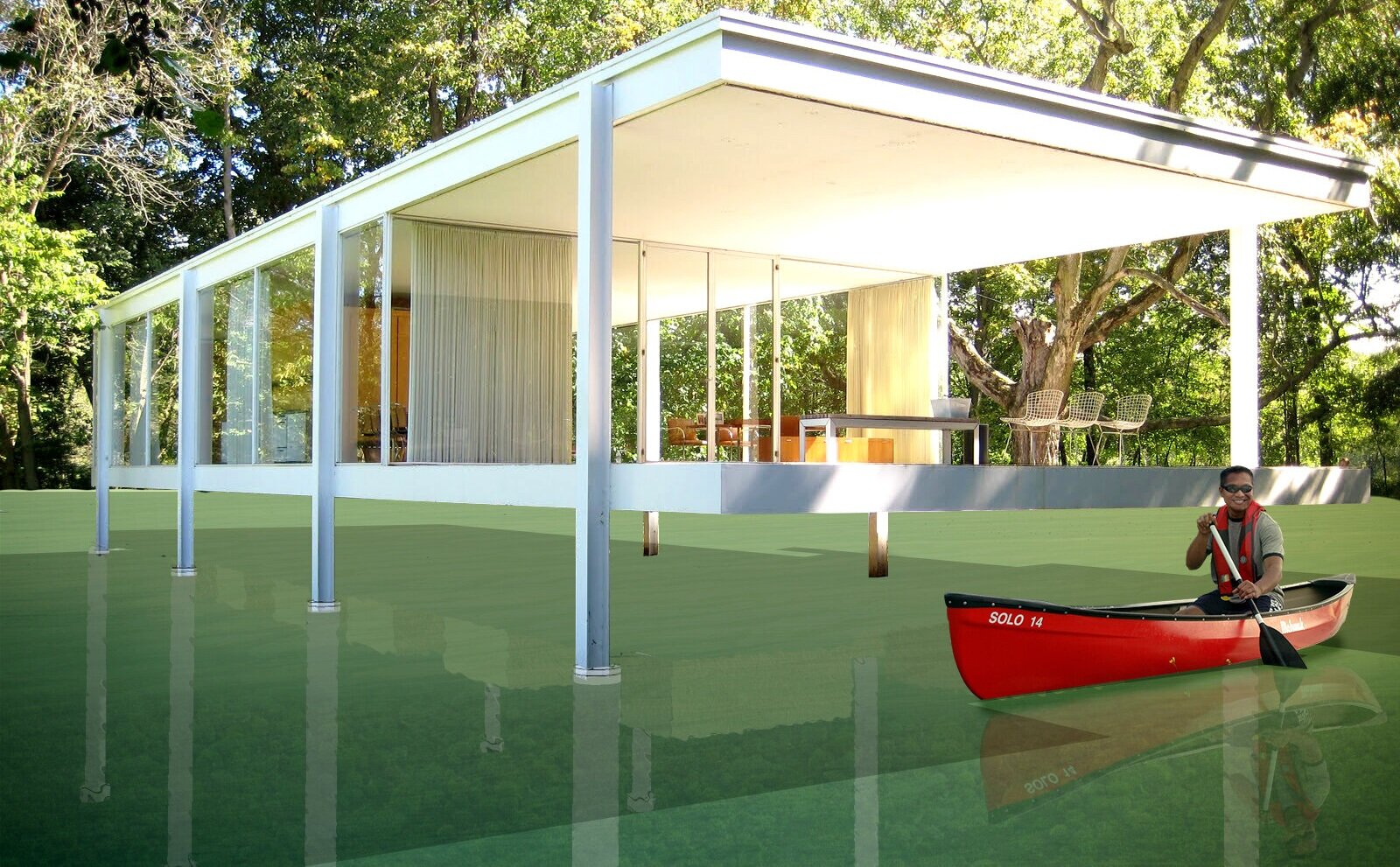
What makes the Farnsworth House so unique, is the way it is such a stark contrast to its natural surroundings, yet when you are in the house the lines of nature and home are completely blurred. The lightness of the seemingly floating house is also quite a unique characteristic of the time. Continuity is emphasized by connecting the beams to the sides of the floor and roof slabs, instead of connecting these elements the traditional way by placing the slabs directly on the top of the beams.
The Interior of the Farnsworth House
The calm stillness of the man-made object contrasts also with the subtle movements, sounds, and rhythms of water, sky and vegetation. In 1954 the river rose six feet above the one-hundred-year-mark and flooded the house. However, Mies was not able to anticipate the increase in water runoff caused by the development in the Chicago area which led to more floods. Current research states that the interior of the house has received flood waters on 6 occasions, beginning in 1954 and becoming more frequent having also flooded in 1996,1997, and just recently in 2008. The windows are what provide the beauty of Mies' idea of tying the residence with its tranquil surroundings.
Publication year
Very recently, drawings have been made public by the Museum of Modern Art that indicate that Mies specified curtain tracks throughout the open plan to enable the house to be divided into three separate rooms through the use of curtains. Corrosion occurs naturally through time, but unforeseen floods have sped up the process. The replacement glass is unfortunately not the same as the original manufacturing process back when the house was built.
Architecture as an expression of the times
Ask a fan of modern architecture to cite a few of the most celebrated residential landmarks of International Style design in the US, and many will name the Edith Farnsworth House high on their lists. Once there, he became the head of architecture and continued his practical architectural work. He both taught a new generation of architects the ways of Modernist architecture, which would go on to influence international architecture in a major way, but he would also continue to design his own buildings. We will discuss him on his own in time, but he was one of the most important figures in Modern architecture and, more specifically, the International Style, which was a form of Modernism. The building was actually not only designed by this famed architect but was also constructed under his supervision.
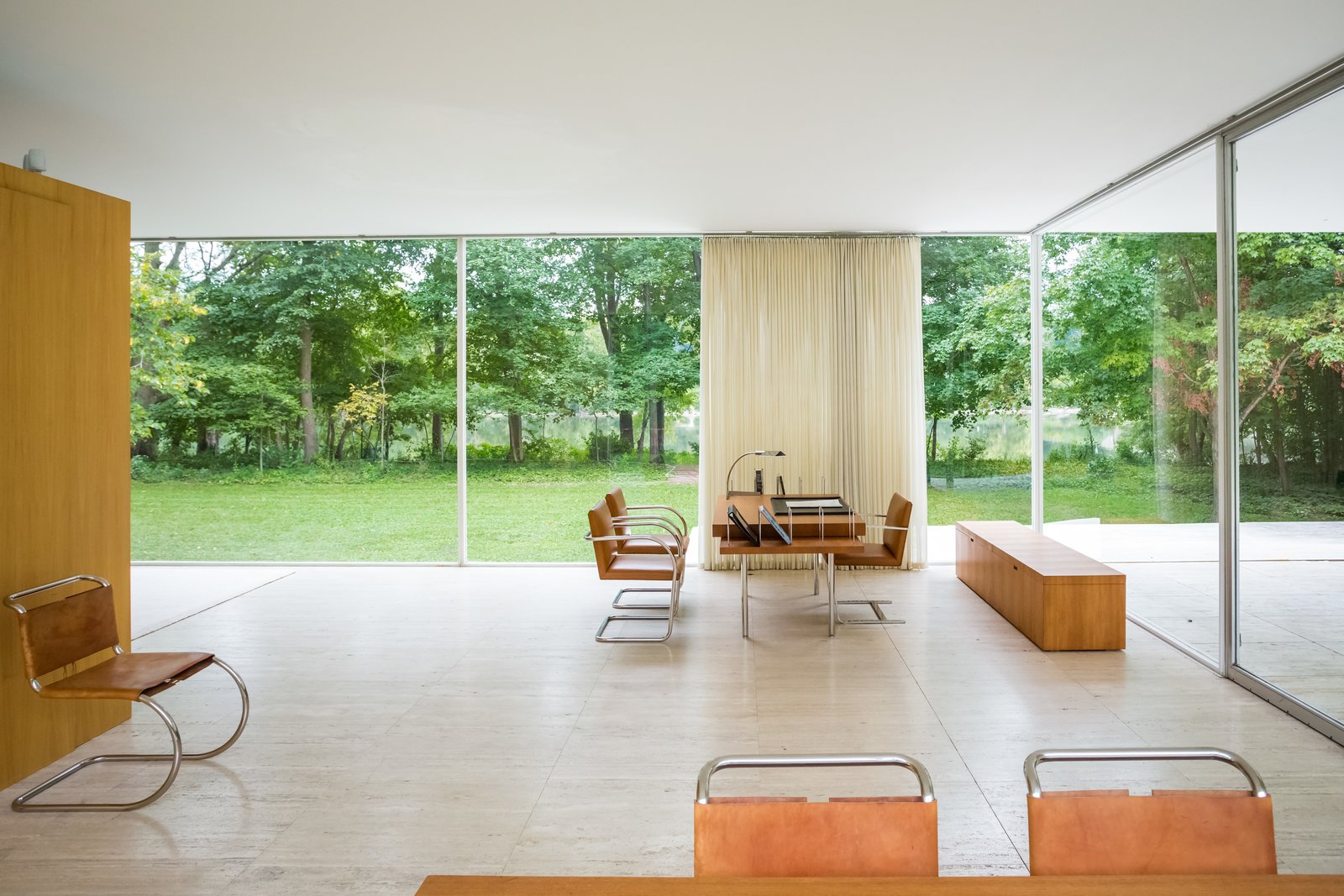
Mies intended for the house to be as light as possible on the land, and so he raised the house 5 feet 3 inches off the ground, allowing only the steel columns to meet the ground and the landscape to extend past the residence. In order to accomplish this, the mullions of the windows also provide structural support for the floor slab. The single-story house consists of eight I-shaped steel columns that support the roof and floor frameworks, and therefore are both structural and expressive. In between these columns are floor-to-ceiling windows around the entire house, opening up the rooms to the woods around it.
How the Edith Farnsworth House Made Room for the Individual
Reframing the relationship between humanity and nature - Chicago Reader
Reframing the relationship between humanity and nature.
Posted: Mon, 26 Jun 2023 07:00:00 GMT [source]
She gave the architect a free hand and a generous budget to create a significant modern home. Construction began in 1950 and proceeded quickly with Mies as general contractor, meticulously controlling every detail. The Edith Farnsworth House was designed and built between 1946 and 1951 as a weekend retreat for prominent Chicago nephrologist, musician, and poet, Dr. Edith Farnsworth, as a place to relax, entertain, and enjoy nature. The house has a distinctly independent personality yet also evokes strong feelings of a connection to the land. The platforms’ levels restate the multiple levels of the site, in a kind of poetic architectural rhyme, not unlike the horizontal balconies and rocks do at Wright’s Fallingwater. When one looks at Nature through the glass walls of the Farnsworth House, it takes on a deeper significance than when one stands outside.
Like Philip Johnson’s Glass Hhouse, which it directly inspired, the Farnsworth house is exceptionally photogenic. It lives in perfect symbiosis with photography, the interior revealing itself to the voyeuristic x-ray eye of the camera. However the most interesting photographs of the Farnsworth house might not be those that show it in its purist glory. Rather, they are those from the later occupancy of Dr. Edith Farnsworth herself, struggling to assert her identity over that of the buildings.
The house was constructed as a one-room weekend retreat in a rural setting in Plano, Illinois, about 60 miles (96 km) southwest of Chicago's downtown. Visiting the home in winter gave me a great appreciation for the radiant floor system that Mies designed and installed. He allowed several inches under the interior travertine to run copper pipes that circulate warm water. Although it takes some time for the water to circulate and heat the floors, it is a great way to condition the house in that it is quiet, and takes relatively small amounts of energy to operate.
A glass house designed to take the heat - The Architect's Newspaper
A glass house designed to take the heat.
Posted: Mon, 28 Aug 2023 07:00:00 GMT [source]
Edith Farnsworth, a prominent nephrologist, commissioned the house from Mies for a property on a (then) relatively isolated floodplain on the Fox river. As the early letters between client and architect attest, the house was to be a relaxed refuge for the cultivation of the self—for translating poetry, playing music, that kind of thing. A new structure, known jokingly as “Barnsworth,” now sits adjacent to the visitor center. Inside, a massive teak wardrobe and closet—a core part of the Edith Farnsworth House that’s difficult to move—is protected from further flood damage.
The Farnsworth House is considered to be one of the greatest structures that Ludwig Mies van der Rohe ever designed. The building is particularly notable because it has withstood the test of time as a stunning expression of the architect’s maxim of “less is more” in terms of both the exterior and interior of the Farnsworth House. The construction was carried out in 1950 and its cost, much higher than the original quote, was the cause of a severe falling-outs between the client and the architect.
The effect of this completely transparent façade is a blurring of the usual boundaries which define the domestic setting. In the Farnsworth House, the distinctions between the public and the private, interior and exterior, often disappear. The only operable pieces of the façade are the double door and the two windows located in the lower part of the Eastern façade.
In 1923, the family moved to Provo, Utah, and Farnsworth attended Brigham Young High School that fall. In later life, Farnsworth invented a small nuclear fusion device, the Farnsworth Fusor, employing inertial electrostatic confinement (IEC). Tickets are required and can be purchased online or by phone when staff is available. Be advised that no pets are allowed on the tours, and there is no shady area to leave them at our Visitor Center.
Each year, CAC staff and our team of more than 450 dedicated docents work together to create new ways to experience architecture. Interior tours are limited to 17 guests at a time and we cannot guarantee availability to walk-in guests. Grounds access does NOT include an interior tour of or entry to the Edith Farnsworth House.